Posted on

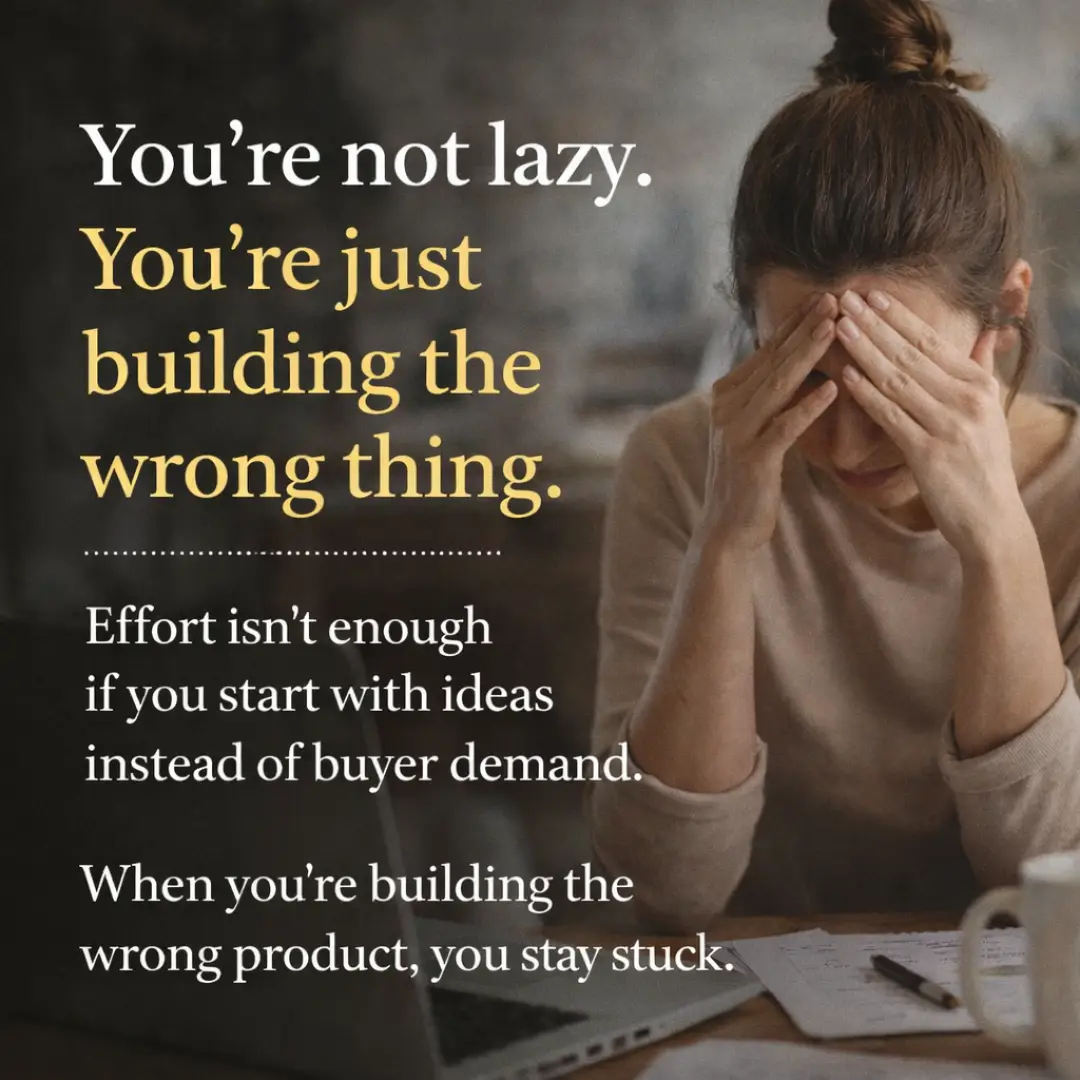
You’re Not Lazy — You’re Just Building the Wrong Thing

You’re Not Lazy — You’re Just Building the Wrong Thing

You’re Not Lazy — You’re Just Building the Wrong Thing

Understanding Why Your Effort Isn’t Turning Into Sales

If you’ve been consistently creating digital products but not seeing results, it’s easy to assume the problem is a lack of effort.

But in most cases, that isn’t true.

The issue is usually much simpler — and much more fixable.

👉 You’re building the wrong thing.

Why Most Digital Products Don’t Sell

A common mistake digital product sellers make is starting with ideas instead of demand.

This usually looks like:

  • Creating what you think people will like
  • Following trends without understanding them
  • Copying what’s already selling
  • Designing products based on aesthetics alone

On the surface, this feels productive.

You’re creating, uploading, and building your shop.

But without a clear foundation, those products often fail to convert.

The Difference Between Effort and Direction

You can spend hours creating a product and still struggle to make sales.

Not because the product is low quality…

But because it wasn’t created with the buyer in mind.

Successful digital products are not built on:

  • guesswork
  • inspiration
  • or assumptions

They are built on clarity and intent.

What Successful Sellers Do Differently

Instead of asking:

❌ “What should I create next?”

They ask:

👉 “What are people already searching for?”

This shift changes everything.

Before creating a product, they focus on:

  • Identifying demand
  • Understanding their target audience
  • Recognising buyer behaviour
  • Spotting gaps in the market

This ensures that every product has a clear purpose.

How to Apply This to Your Own Business

Before creating your next digital product, take a step back and ask:

  • Is there proven demand for this?
  • Who is this product for?
  • What problem does it solve?
  • Why would someone choose this over alternatives?

If you can’t clearly answer these questions, it’s worth pausing before you build.

Why This Approach Works

When you start with demand:

  • Your products are easier to position
  • Your messaging becomes clearer
  • Your listings become more targeted
  • Your chances of conversion increase

You’re no longer relying on hope — you’re building with intention.

Final Thought

If your products aren’t selling, it doesn’t mean you’re not capable.

It usually means you’ve been creating without a clear direction.

Once you shift your focus from ideas to demand, your entire approach becomes more effective — and your results begin to reflect that.


Posted on

The 5 Ps to Build a Profitable Digital Product Business

Business Planner Lifestyle photo

The 5 Ps to Build a Profitable Digital Product Business

Building a profitable digital product business doesn’t happen overnight — it’s a process of strategy, creativity, and consistency. Whether you’re just starting out or scaling your online store, mastering the 5 PsPlan, Product, Platform, Promote, and Profit—will help you build a strong foundation that lasts.

At Click Hub Marketing Shop, we help digital entrepreneurs like you simplify that process. Let’s break it down step-by-step so you can take action at each stage.

1. PLAN – Define Your Direction and Purpose

Before creating your first product, take time to plan. This stage is all about understanding who you’re helping and why your digital products matter.

  • Define your niche – What specific audience do you want to serve? (e.g., Etsy sellers, teachers, small business owners, or digital creators).

  • Pinpoint the problem – What are they struggling with? What solution can your products provide?

  • Map your product path – Think long-term. Will you create templates, clipart, planners, or courses? How do they all fit together?

A clear plan ensures that every product has a purpose and aligns with your customer’s goals.

🛠️ Helpful resource: Digital Product Business Planner – Click Hub Marketing Shop

2. PRODUCT – Create What Your Audience Actually Wants

Your products are the backbone of your business. The key is to create high-value digital assets that your audience truly needs and loves.

Types of profitable digital products include:

Quality matters. Focus on design, usability, and solving specific pain points — not just creating for the sake of it.

🛠️ Helpful resource: Explore PLR Products & Templates with our FREE membership

3. PLATFORM – Build a Seamless Customer Experience

Once you have your product, you need a reliable platform to sell it.
Your website or shop should make the buying experience smooth, automated, and trustworthy.

Key elements to set up:

  • E-commerce store: Use WooCommerce or Shopify for easy management.

  • Automated delivery: Ensure customers instantly receive files after purchase.

  • Payment systems: Offer secure options like PayPal, Stripe, or Apple Pay.

  • Tracking & analytics: Use Google Tag Manager or Meta Pixel to monitor conversions and improve results.

Your platform is the engine behind your business — when it runs efficiently, you can focus on growth instead of constant maintenance.

4. PROMOTE – Get Seen, Get Clicked, Get Sales

Now that your store is live, it’s time to bring traffic in. Promotion isn’t about shouting louder — it’s about showing up consistently in the right places.

Here’s where to focus:

  • SEO: Optimize product titles, descriptions, and tags for organic search traffic.

  • Pinterest: Create beautiful pins that drive targeted visitors to your store.

  • Email Marketing: Build a list and nurture your subscribers with helpful tips and offers.

  • Social Media: Share content that educates, entertains, or inspires your audience.

Consistency is key. Even a small amount of regular marketing will compound over time.

5. PROFIT – Scale Without Burnout

Once sales start rolling in, your focus shifts to scaling sustainably. You don’t need to chase constant new launches — instead, maximize what’s already working.

  • Bundle products: Offer themed collections or discounted sets.

  • Memberships: Provide ongoing access to resources and build recurring income.

  • Upsells: Recommend complementary products at checkout.

  • Automate marketing: Use email sequences and social scheduling tools to save time.

Profit isn’t just about more revenue — it’s about smart systems, time freedom, and building something you love.

🛠️ Helpful resource: Join the Click Hub Membership – All Access Resources

Final Thoughts

The 5 Ps framework gives you clarity and structure — helping you move from idea to income step-by-step. Whether you’re a designer, educator, or creative entrepreneur, your digital product business can thrive when built with intention.

At Click Hub Marketing Shop, we provide ready-to-use templates, PLR content, and training resources to make every stage easier.

✨ Start today: clickhubmarketing.shop